189
hunting trips
$297
starting from
36
outfitters
79
animals
Why Namibia

Safe destination
Namibia is among the safest and most stable countries in Africa
Organized hunting industry
Namibia has a highly organized, conservation-focused hunting industry and a government that is very supportive of hunting tourism
Diverse selection of game
Namibia boasts a diverse selection of game animals, including some species found nowhere else
About hunting in Namibia
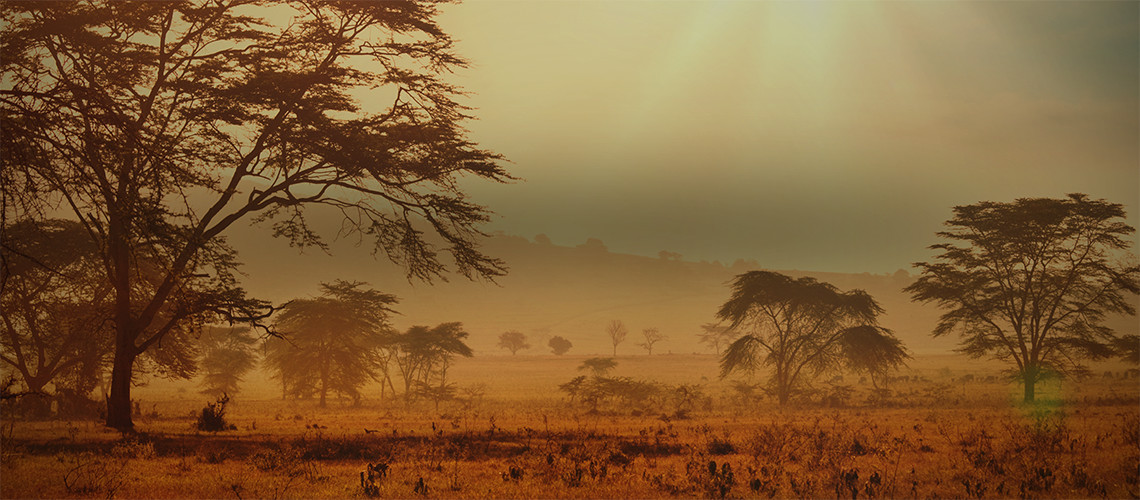
Namibia is a country of deserts and vast horizons, where free-range plains game, classic dangerous game, and a proven conservation model come together. From the red dunes of the Namib to the Zambezi Region’s floodplains, hunters find professional guiding standards, and an abundance of game in landscapes that still feel wild and unhurried.

Namibia on map
Namibia lies on Africa’s southwest coast between Angola and South Africa, with Botswana and Zambia to the east and northeast. The coastal Namib Desert forms the country’s western edge; the elevated Central Plateau carries most ranch and conservancy hunting; the Kalahari sandveld spreads in the east; and the Zambezi Region projects toward the great rivers of southern Africa.
What you need to know
1. Planning your trip
2. Upon arrival
3. Hunting
4. After the hunt
Planning your trip
Visas
Citizens of the USA and most European countries who are visiting Namibia for 90 days or less are issued a visa on arrival and no advance application is necessary. Be sure to have several blank pages in your passport, and be sure your passport is valid for at least six months after your planned departure. Check the visa rules that apply to your passport type at this link: https://namibia.visahq.com/
Price distribution
Namibia is one of Africa’s best values for quality-guided, free-range plains-game safaris, especially on ranches and freehold conservancies with healthy populations and short transfer times from Windhoek. Day rates are moderate, and trophy fees scale with species scarcity and horn quality. Hunts in remote communal conservancies and Zambezi concessions cost more due to charter flights, seasonal camp builds and river logistics, and dangerous-game packages command premium pricing tied to quota availability and permit conditions. Reputable outfitters spell out inclusions, licensing, trophy preparation and export steps up front, and will brief you on any CITES or destination-country import constraints that apply to cats, elephant, rhino and other regulated species.
$297
$17,723
$35,149
$52,575
$70,001
Learn more about hunting in Namibia
Quick Facts
- Capital City: Windhoek
- Official Language: English. German widely spoken
- Currency: Namibian Dollar (N$)
- Size: 824,290Km2 (Larger than Texas)
Nov 11, 2022
Hunting in Namibia. Part I: Where to Go and What to Hunt
Hunting methods
Hunting is conducted in classic safari fashion with an emphasis on fair-chase footwork. Plains game is typically located by glassing from trucks and vantage points and then stalked on foot through bush and broken ground. Bowhunters usually wait for the animals from blinds strategically positioned at waterholes and natural funnels, which is especially productive in the dry season. In the Zambezi Region, swamp and floodplain species like lechwe and sitatunga are taken by careful approaches from boats or blinds set in papyrus edges, timed to water levels and wind.
Dangerous game such as buffalo, elephant, hippo and crocodile are pursued under strict quota and permit conditions and normally involve long hours of tracking on fresh spoor, measured approaches and close coordination with the professional hunter. National rules set minimum calibers - .243 for small antelope, .270-class for medium game, and .375 for dangerous game - and restrict night hunting and artificial light, with specific allowances defined by permit for certain species.
Game classification
Reviews

Jayden
Singapore
10.0
Verified review
Jun 1, 2026
Warm Hospitality and Wonderful Guidance on Hunting
10.0
Jannie & Marilize
Outfitter
The warm, family atmosphere and the outstanding cuisine, which never failed to impress, made this place truly unforgettable. The kind and welcoming couple made me fall in love with this place. Far from the noise and distractions of modern life, it offers a unique opportunity to experience Africa’s untouched natural environment and wildlife.
The host possesses extensive hunting experience and an exceptional knowledge of the animals and their distribution across the farm. With his guidance and expertise, I was fortunate enough to harvest several trophy animals, which was an incredibly exciting and rewarding experience. I will certainly return in the future to hunt Kudu & Eland again. It was simply a wonderful experience and one that I will always remember.
I am completely satisfied with everything
Reliable
High Quality
Useful
Unique
Good Value for Money
Client review
Italy
10.0
Verified review
Sep 9, 2025
The greatest experience
10.0
Bennie
Outfitter
Everyting was amazing: the hunt, the land, the game, the trophy, people, the accomodation and food. Bennie and his son Benjamin do an incredible job, trackers have a lot of experience. The thing that makes this whole adventure incredible, however, is the Boshoff family.
Nothing.
High Quality
Unique
Jeff
Canada
10.0
Verified review
Jun 12, 2025
Fourteen days with Anton
10.0
Anton - Dangerous Game Professional Hunter & Owner
Outfitter
Antonie Esterhuizen of Estreux Safaris offered a deal a while ago that seemed made for me. We hunted in the Grootfontein area as years of prolonged drought had made the proposed hunt in Kaokaland unfeasible. You can read plenty of reviews of hunting from other posters, the sentiments of whom I share, so I won't spend much time reviewing the hunt itself; instead, I want to review my non-hunting week, because it will give a pretty clear picture of Anton and Estreux.
The second week of my time with Anton was truly something special. After hunting for seven days, he took me on a trip through northwest Namibia. It was apparent from the reviews of Estreux Safaris that Anton is a very knowledgeable man, and this was so evident on the trip. I cannot believe that anyone in Namibia knows his country as well as he does. His encyclopedic knowledge of the flora, fauna, geology, and history of Namibia are formidable, and at every turn we encountered people who know him from his many services to Namibia. His trip included an eclectic variety of places and experiences; every day and night brought a different experience: Etosha Heights, Etosha, Camp Aussicht, a mountain-top villa of his Himba expert and mining friend, Marius, Sesfontein, Ongongo waterfall, the Himba sacred mountain, Khowarib Lodge, the Skeleton Coast, Swakopmund, and a trip to Joe's in Windhoek on the evening before my departure. This is by no means the complete list. His attention to detail and desire to satisfy his clients can be illustrated with two brief examples: one night, he had me seated in such a way as to afford me the impressive spectacle of the full moon rising from behind a mountain just as supper was served; on another, he presided over the arrival and feeding of four porcupines who then provided hours of entertainment as we spent the evening with his mountain-dwelling friends. I had once mentioned that it would be nice to see a porcupine.
I have had numerous trips to Africa and have hunted in four countries. I have been fortunate that every trip has been very good to exceptional. Anton stands at the top of the list. I will certainly return, but will be sure to take more time. There are so many places to hunt and visit in Namibia, and Anton is the guy I will want to guide me in further exploration of that wonderful country. Give him a try. Anton will put you on to excellent animals, and teach you so much that will your time will be very fulfilling.
Immigration in Windhoek. I hope they up their game.
Reliable
High Quality
Good Value for Money
Fouad
Canada
10.0
Verified review
Apr 5, 2025
Go!
10.0
Hannes - outfitter and professional hunter
Outfitter
Everything about this hunt was above what i expected. This is a family run business, they all try their heart out to make sure you’re comfortable and happy with your stay there, even went ahead of quota so they took me to Swakopmund for a few days to make sure i enjoyed myself, steph and the team they work with are all excellent at their jobs
Nothing
Andrew
United States
10.0
Verified review
Oct 22, 2024
My 2024 hippo hunt with JJ Hunting Adventures
10.0
Jaco: Owner, Outfitter & PH
Outfitter
Jaco is an awesome PH! great accommodations and we probably seen close to 100 hippos before landing on the bull i took. Will hunt with Jaco again!
Next time I would look into the flight to Rundu over driving up, that was it.
Client review
United Kingdom
10.0
Verified review
Aug 19, 2024
The most professional outfitter I have ever met.
10.0
Jaco - Owner
Outfitter
The NSC were flawless from start to finish. Throughout our time in Namibia they could not have been more helpful; we did three days hunting with them and then a self drive road trip for another week.
I’ll come on to the hunting in a second but I must say that they went above and beyond in assisting us with bookings, locations to stay, logistics, lending equipment (when an airline lost ours). They even went out of their way to help us with a personal issue long after we had finished with them as a commercial provider. Dealing with them was like dealing with friends, their hospitality and desire to see us have a good time in their country was genuinely humbling. Thank you so much.
The hunt. The PH and local tracker were both outstanding. Knowledgeable, hard working, personable and took the time to understand what we wanted. They were flexible throughout as we changed the plan and accommodated specific requests we had like turning meat in to biltong or taking steaks away with us.
The wildlife was PHENOMENAL. We visited a number of national parks on our holiday and the NSC’s hunting area had wildlife variety and density that rivalled the best national parks. I was blown away by the quantity and beauty of the wildlife they showed us.
I cannot wait to see them again and learnt so much on our first African hunt. Thank you NSC.
Literally nothing.
Meet your guides
Check out what outfitters have to say about their properties and hunting experience with them!
Jaco van der Merwe
Namibia
Born out of 12 years of hunting experience, we offer the best plains game, as well as leopard hunts, for both rifle and bow hunters, in Namibia.
Our 109 000 acres of privately owned hunting ground presents a spectacular diversity of game, bird species as well as unique and incredible plants. Here you will be able to hunt 16 different plains game species including Leopard and Spotted Hyena.
Katja Metzger
Namibia
We have been owned and family-operated for three generations. We have maintained and expanded our vast hunting areas with a sensible game management programm in place. The area is never over-hunted. This makes it possible for you to have an extraordinary adventure everyday and take trophies that can be world records!
Hannes du Plessis
Namibia
We own a beautiful Namibian hunting ranch containing 25 different species of African plains game. This Namibian lodge offers you an opportunity to experience a trophy hunting trip, specifically planned around these African game.
According to the Namibian Quality Control System, approximately 90% of the hunting trophies taken on this Namibian hunting farm are Gold Medal trophies.
Danene van der Westhuyzen
Namibia
Experience the raw beauty and abundance of Africa with us. Our approach to running hunting safaris in Namibia is simple: an emphasis on the longevity of our business and the sustainability of our client relationships matched only by our focus to preserve our amazing natural resources.
We have an abundance of self-sustainable game and a host of species including a large variety of plains game. Our concession areas in the northern part of Namibia offer top quality dangerous game hunting.
Animals
Bush TV
Check out an amazing footage from outfitters and landowners properties.
Cheetah hunting
Cheetah making a very slow approach on its prey
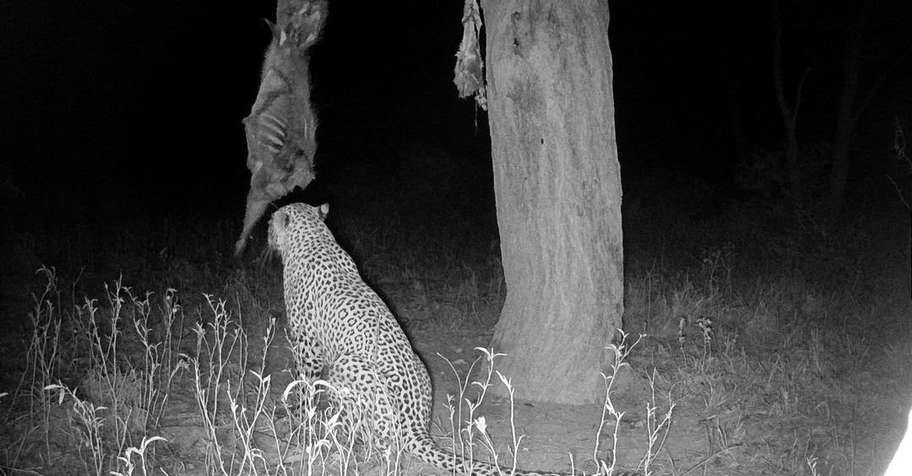
Leopard cleaning
Leopard cleaning itself like a cat would
Cheetah Climb
Cheetah climbing a tree
African Wild Dog
The African wild dog, also called the African painted dog and the African hunting dog, is a wild canine which is a native species to sub-Saharan Africa. It is the largest wild canine in Africa
Leopard
Now you see me and now you don't. Leopard making sure he disappears in the thick Caprivi bush.
Big Elephant Herd
Elephant herd in the Caprivi Namibia eating and drinking
Curious Elephant
These incredible animals are relatively easy to read, most of the time... this young bull was just testing his limits with the hunters before they challenged him off.
Journey of Giraffe
Not many people know that a standing herd of Giraffe is called a "Tower" and a moving herd of Giraffe is called a "Journey". Namibia has some of the best Giraffe hunting destinations available
Red Lechwe in Caprivi
Little do people know, the Caprivi, along with select parts of Botswana and Namibia hosts some of Africa's largest population of Red Lechwe.
Dagga Boy
"Dagga boy" is name used for large old Buffalo bulls that have been kicked out of the herd and spend almost all day wallowing in Mud. And that is exactly what this Buffalo did!
Elephant Cool-down
The Caprivi is known for their healthy Elephant population and hunting. This young bull was filmed on safari taking a midday mud bath to cool himself down.
Caprivi Bat-Eared Fox
By far one of the coolest animals in Africa! Very few destinations or outfitters offer this unique species to hunt.
Top hunts
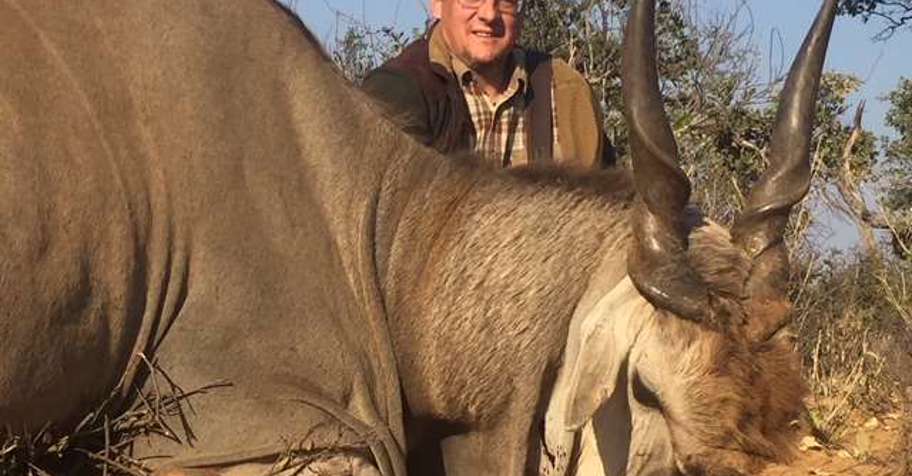
2:1 Namibian Plains Game Hunt
Namibia
Baboon, Black wildebeest, Black-backed jackal, Black-faced impala, Blue wildebeest, Brown hyena, Burchells zebra, Cape eland, Caracal, Common blesbuck, Common duiker, Common reedbuck, Damaraland dik-dik, Gemsbuck, Giraffe, Hartmanns zebra, Impala, Kalahari springbok, Klipspringer, Kudu, Nyala, Ostrich, Red hartebeest, Red lechwe, Roan, Sable, Spotted hyena, Steenbok, Tsessebe, Warthog, Waterbuck
Bow Hunting, High Seat, Hunting From a Blind, Mountain Hunting, Muzzleloader, Rifle Hunting, Stalking
Season: Feb 1, 26 - Nov 30, 26
Daily rate fee
$2,450
for 9 days, 1 hunter
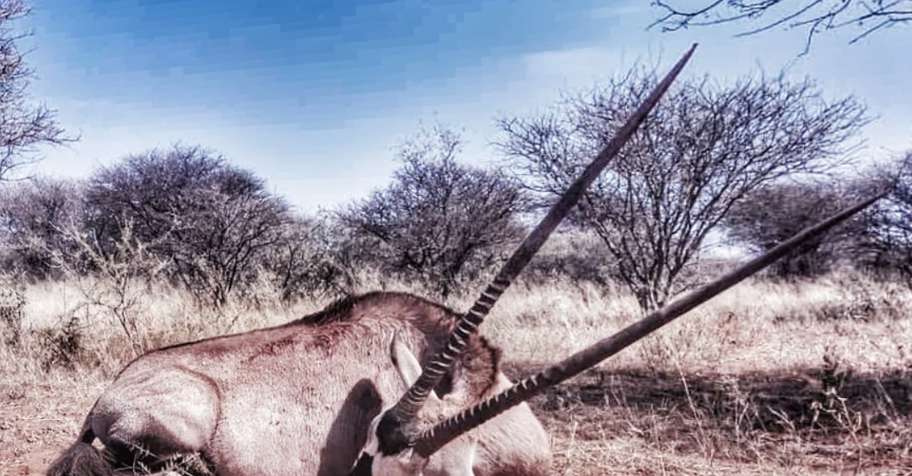
Namibia
Interested in this destination?
Create a subscription to get offers right to your inbox
You might also like
Explore hunting
trips worldwide
trips worldwide
Direct offers from outfitters
with no booking fees
with no booking fees
Verified reviews
from other hunters
from other hunters