
364
hunting trips
$1,350
starting from
112
outfitters
About Wildebeest hunting
Blue Wildebeest, a.k.a. Common Wildebeest, Brindled Gnu and "the poor mans Buffalo" is the classic quarry of “plains game” hunting.
Blue Wildebeest inhabits the savannah, and by far the most popular way of hunting it is the traditional spot-and-stalk. This is a hunt where the level of difficulty increases with each step.

Where to hunt Wildebeest
Wildebeest, a.k.a. Gnu, is one of the most well-known African antelopes. The uncountable herds of this antelope during their annual migration make a striking sight that is a favorite with TV channels and illustrated magazines, and attract thousands of wildlife viewers who want to see it with their own eyes. Two species of Wildebeest exist: the Blue Wildebeest, also known as the Common Wildebeest, is the animal whose migration scenes are mentioned above. The Black Wildebeest is the native of South Africa and is characterized by peculiar, forward-facing horns. The species are closely related and easily interbreed. The Common Wildebeest is further divided into five subspecies: the Blue, Eastern White-Bearded, Western White-Bearded, Cookson’s Wildebeest, and Nyasa Wildebeest, while rare color phase variants, such as Golden Wildebeest, are found on some South African and Namibian game ranches. Wildebeest hunting opportunities exist in Tanzania, Mozambique, Zambia, Zimbabwe, Botswana, Namibia and South Africa.
Price distribution
You can find a cull Wildebeest hunt for under $1,000. However, in most cases the trophy fees (with permits) for a Blue Wildebeest run at about $1,000-$1,200, for the Black Wildebeest - $1,000-2,000, and for the rarer kinds may be even higher. Few hunters travel as far as Africa to hunt just one antelope; most prefer to pursue five to seven “plains game” species in the course of a 5 to 10 day hunt. Such “plains game packages” usually start at $3,000. The most expensive Wildebeest hunts are the most exotic color phase variants in South Africa, and the old-school safaris in Tanzania.
$0
$45,000
$90,000
$135,000
$180,000
A Poor Man’s Buffalo? Wildebeest and Wildebeest Hunting
The stubborn-looking, hump-backed antelope with short, curving horns and somewhat clumsy appearance (said to be assembled by God out of leftover parts after He made all other animals) is one of the most recognizable images of Africa. Learn more about Wildebeest, the species, distribution, and hunting tips, from our blog.
Feb 22, 2019
A Poor Man’s Buffalo? Wildebeest and Wildebeest Hunting
When to hunt Wildebeest?
Typically for Africa, Wildebeest hunting opportunities exist pretty much year round. December to February, however, are usually too hot for most African countries. Like with many other ungulates, the best time for hunting is the rut, when bulls display themselves on their small mating territories and fight with other bulls for them. The rut usually happens in May to July.
Jan
Feb
Mar
Apr
May
Jun
Jul
Aug
Sep
Oct
Nov
Dec
Hunting methods
Wildebeest is a creature of the savannah, a habitat perfectly suited for spot-and-stalk hunting, as it is often just open enough to allow easy identification of animals, and provides just enough cover for quiet approach. But fooling a thousand eyes and ears in a big herd can be quite a challenge, and so, when the hunter and the PH cover the ground (often in vehicles) trying to find the herd with a good bull in it, they’re mostly looking for a small herd or bachelor group. Wildebeest’s reputation for toughness earned it a nickname “poor man’s buffalo”, and most PHs advise a rifle of the 7 mm - .300 Magnum class to hunt it. Hump on the shoulder makes hunters unaccustomed to this animal aim too high.
Bush TV
Check out an amazing footage from outfitters and landowners properties.

Blue Wildebeest herd
Large Blue Wildebeest herd in the Kalahari with Chapungu-Kambako Safaris
Black Wildebeest
Black Wildebeest chasing one another at a waterhole
Wildebeest Run!
The locals say Wildebeest have worms in their head... we understand why! This trail cam footage caught a herd of Blue Wildebeest playing and sparring at the waterhole in South Africa.
Blue and Golden Wildebeest
Wildebeest Bulls giving it horns!
Cookson's Wildebeest
Cookson’s Wildebeest is found in just one region of the planet, the Luangwa Valley in Zambia. It is a subspecies of the Blue, or Common, Wildebeest, the animal you’ve all seen on TV and in illustrated magazines, doing the breathtaking annual migration in uncountable herds. Cookson’s Wildebeest is said to be bigger and lighter colored than other subspecies of Gnu. Hunting opportunities for this subspecies exist only in Zambia.
Why hunt Wildebeest?
Wildebeest is the classic quarry of “plains game” hunting. The indigenous hunters-gatherers track and stalk it or sit over waterholes with their primitive bows and arrows, and long journeys in teams of friends to hunt them for biltong is an old tradition of South Africans. The meat of wildebeest is said to be tough and dry when fresh but a delicacy when converted to biltong. The skin is the source for high-quality leather, and the tail of the black wildebeest, long and flowing, is used for traditional fly-whisks. And the horns, for the international hunter, will be a long-lasting memento of the outlandish experience of hunting in Africa.
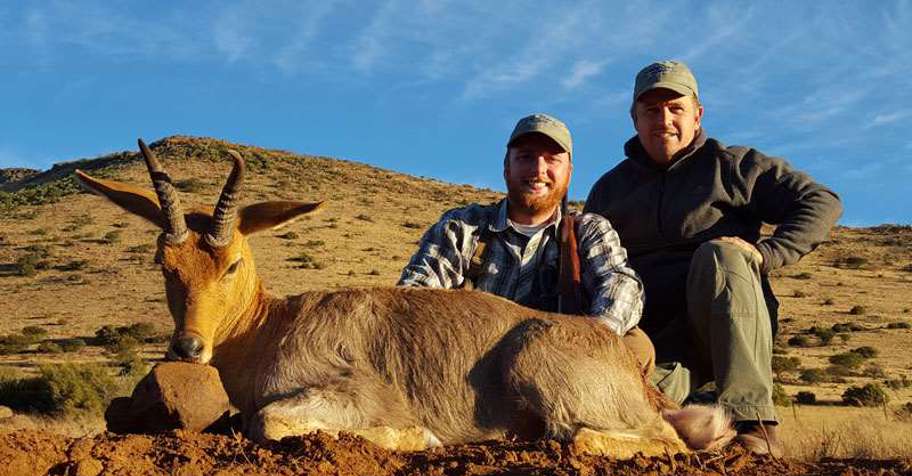
Eastern Cape Plains Game Safaris 1x1
Eastern Cape, South Africa
Black wildebeest, Blue wildebeest, Baboon, Black springbok, Black-backed jackal, Blue duiker, Bontebok, Burchells zebra, Bushbuck, Bushpig, Cape buffalo, Cape mountain zebra, Cape springbok, Caracal, Common blesbuck, Common duiker, Common reedbuck, Copper springbok, Eland, Fallow deer, Gemsbuck, Giraffe, Grey rhebuck, Grysbuck, Impala, Klipspringer, Kudu, Mountain reedbuck, Nyala, Oribi, Ostrich, Porcupine, Red hartebeest, Roan, Sable, Southern greater kudu, Steenbok, Tsessebe, Vervet monkey, Warthog, Waterbuck, White blesbuck, White springbok
Bow Hunting, Rifle Hunting, Stalking
Season: Jan 1, 25 - Dec 31, 26
Daily rate fee
$3,150
for 7 days, 1 hunter
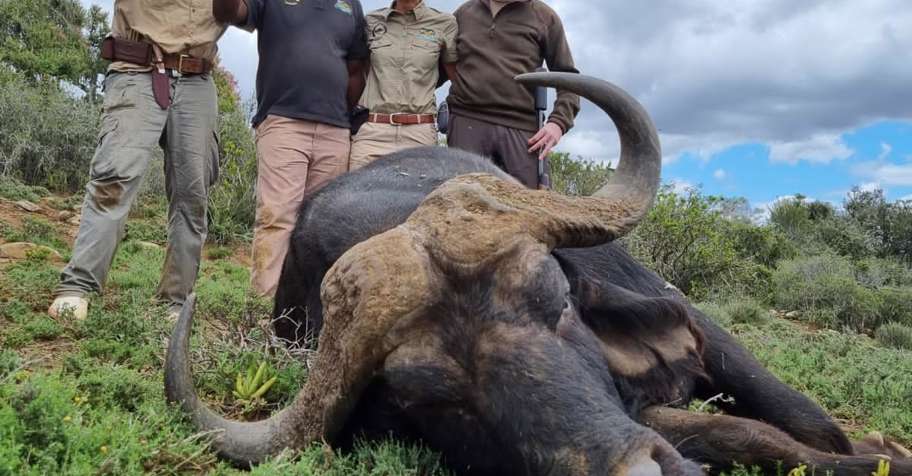
2:1 Cape Mountain Hunt
Eastern Cape, South Africa
Black wildebeest, Blue wildebeest, Baboon, Blue duiker, Burchells zebra, Bushpig, Cape buffalo, Cape bushbuck, Cape eland, Cape mountain zebra, Caracal, Common blesbuck, Common duiker, Common springbok, Eastern cape kudu, Gemsbuck, Genet cat, Giraffe, Hare, Impala, Mountain reedbuck, Nyala, Ostrich, Porcupine, Red hartebeest, Red lechwe, Roan, Sable, Steenbok, Warthog, Waterbuck, White blesbuck
Baiting, Bow Hunting, Calling, Crossbow Hunting, Driven Hunt, High Seat, Horseback Hunting, Hunting From a Blind, Mountain Hunting, Muzzleloader, Rifle Hunting, Shotgun Hunting, Stalking, Walk up With Dogs
Season: Feb 1, 24 - Dec 31, 26
Daily rate fee
$2,811
for 7 days, 1 hunter
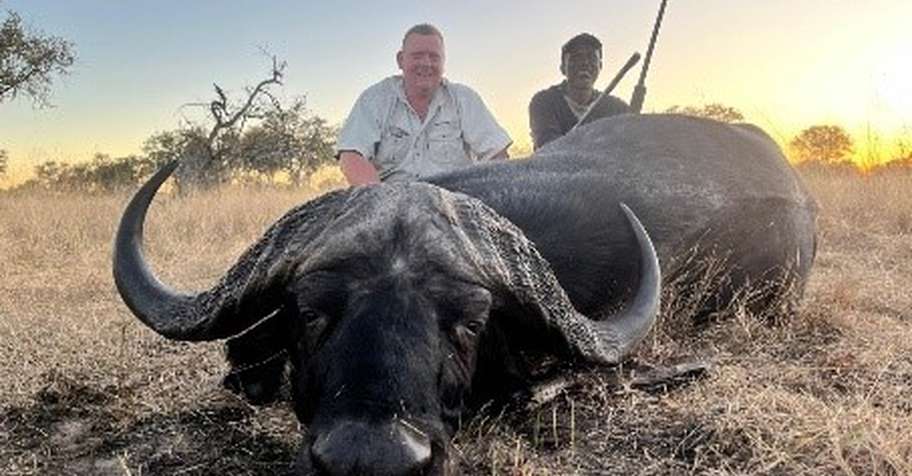
Wildebeest
Interested in this animal?
Create a subscription to get offers right to your inbox
Explore hunting
trips worldwide
trips worldwide
Direct offers from outfitters
with no booking fees
with no booking fees
Verified reviews
from other hunters
from other hunters