8
hunting trips
$29,000
ab
1
Jagdanbieter
4
Wildarten
Warum Nepal

Jagd auf dem Dach der Welt
Jagden in Nepal sind eine Herausforderung wie keine andere, da dich die höchsten Berge der Welt fordern werden
Verfolge einzigartige Arten
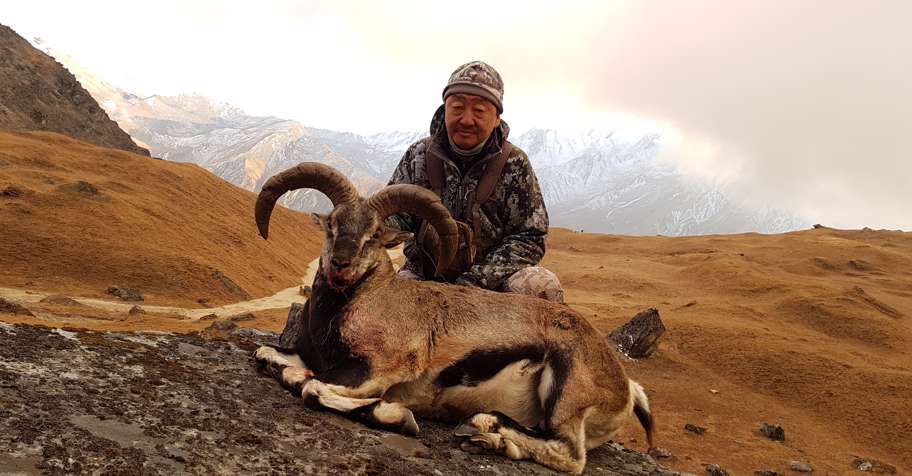
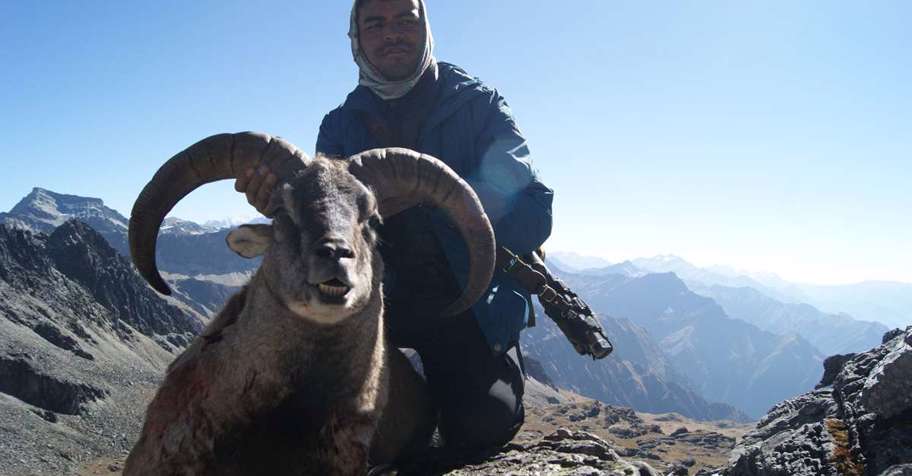
Nepal ist der einzige Ort auf der Welt, der Himalaya-Tahr in seiner natürlichen Umgebung beheimatet. Sie können auch Blauschafe jagen, das am höchsten-lebende Säugetier der Welt
Vielfältige Kultur
Erleben Sie die vielfältige Kultur Nepals, einschließlich buddhistischer und hinduistischer Traditionen, und lassen Sie sich von den Sherpas, den weltbesten Bergsteigern, unterstützen und führen
Über die Jagd in Nepal
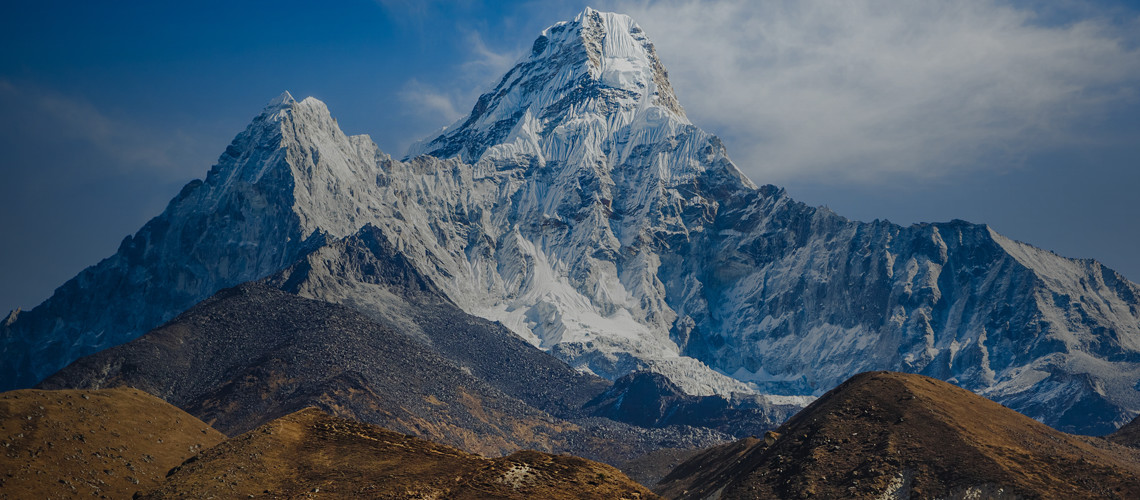
Nepal is a small south Asian country that boasts a tremendous diversity of terrain, climate, and wildlife. While it is best known for having eight of the world’s ten highest peaks within its borders, Nepal’s geography consists of three very different zones. The northern part of the country, the Himalayas, contains the highest mountains in the world, including Mount Everest at 29,029 feet. The Hill Region abuts the mountains, up to about 13,123 feet, and the southern lowlands, or Terai, bordering India, is a plains region with a steamy, subtropical climate. In these three regions are species as diverse as blue sheep, Himalayan tahr, snow leopard, Indian rhinoceros, wild boar, and several species of deer.
Modern-day hunts are conducted in the Dhorpatan Game Reserve. Hunting blue sheep and Himalayan tahr here is arguably one of the world’s greatest mountain hunts. It’s possible to go in either fall or spring. It goes without saying that the Himalayas are high and very steep, so this is an extreme hunt requiring excellent physical fitness. There is usually a two- to four-day hike just to get to the hunting area after a helicopter drops you off at 10,000 feet. Experienced Sherpas carry much of the gear.
Tahr are found near timberline, around 12,500 feet, in steep, cliffy areas. Blue sheep are the world’s highest-dwelling large mammal and are hunted at altitudes of 16,000 feet or more. Other species that are legal to hunt in Nepal include the Indian muntjac or barking deer, wild boar, and hog deer. Most hunters come for sheep and tahr, and a few also hunt muntjac, which can be found in the mountains and hill zone. Hog deer and wild boar are rarely hunted as they are found in the plains regions where there is currently no organized hunting.
Jagden in Nepal auf der Karte
Was Sie wissen müssen
1. Planen Sie Ihre Reise
2. Ihre Ankunft
3. Die Jagd
4. Nach der Jagd
Planen Sie Ihre Reise
Visum
Most hunters arrive in Kathmandu. Unless you are a citizen of India or Nepal, you must have a visa. Nepali embassies and consulates issue visas with no fuss. You can download a visa application form from the websites of the Nepali embassy in Washington, DC (www.nepalembassyusa.org) or London (www.nepembassy.org.uk).
You can also get a visa upon arrival. To do so you must fill in an application form and provide a passport photograph. A single-entry visa valid for 15/30/90 days costs US $25/40/100.
Preisverteilung
$29,000
$31,250
$33,500
$35,750
$38,000
Jagdbare Wildarten
Wildarten
Top Jagden
Nepal
An diesem Land interessiert?
Newsletter anmelden, um Angebote direkt in Ihren Posteingang zu bekommen
Es könnte Sie auch interessieren
Explore hunting
trips worldwide
trips worldwide
Direct offers from outfitters
with no booking fees
with no booking fees
Verified reviews
from other hunters
from other hunters