
82
hunting trips
$2,995
ab
25
Jagdanbieter
About Tahr hunting
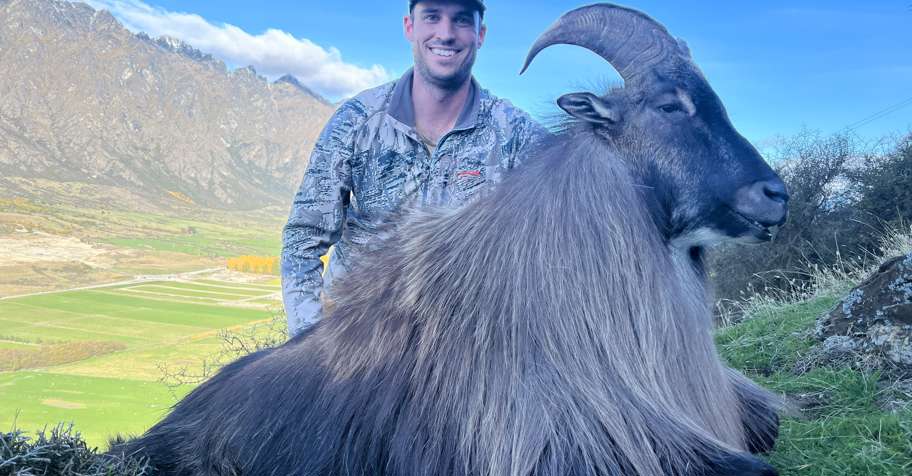
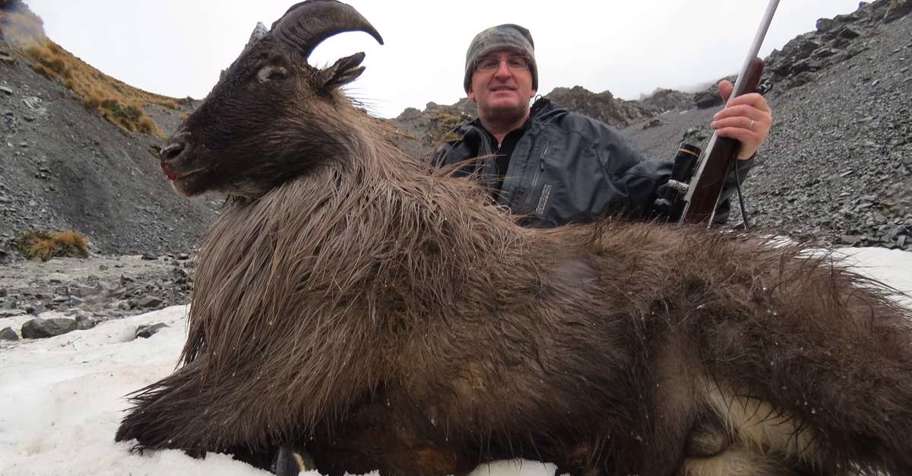
Tahr is a relatively small, but unusual looking mountain ungulate, distantly related to North American Mountain Goat. In its native range in the Himalayas it is endangered, and opportunities to hunt are strictly limited. However, it is possible to hunt introduced populations of Tahr that exist in other countries. Those include Macedonia and Argentina, but, of course, the go-to destination for a Tahr hunting is New Zealand, what with an abundance of Tahr and other game animals, breathtaking views, opportunities for other outdoor pursuit, and affordable prices.

Where to hunt Tahr
Tahr is the name that can refer to several mountain ungulates. The Nigiri tahr, closely related to mountain sheep, inhabits several mountain ranges in the south of India. The Arabian tahr, also related to wild sheep, specifically to the aoudad, occurs in the east of the Arabian peninsula. Both these species are endangered, and no recreational hunting is possible. When you hear about tahr hunting, almost every time it refers to the Himalayan tahr. This species belongs to the Caprenae family, and is distantly related to North American mountain goat. In its native range in the Himalayas, the opportunities to hunt it are strictly limited, and at the time of writing exist only in Nepal. However, it is possible to hunt introduced populations of tahr that exist in other countries, including Bulgaria, Macedonia and Argentina. But the go-to destination for tahr hunting is New Zealand, what with an abundance of tahr, other game, breathtaking views, opportunities for other outdoor pursuits such as fishing, and affordable prices.
Preisverteilung
New Zealand offers the most affordable Tahr hunting trips, that start at about $5,000 or so for a basic hunt in areas readily accessible by transport. A longer hunt with helicopter transfer to spike camp will be in the $7,000-$10,000 range. Hunting Tahr in Nepal is most expensive and will set you back $25,000 or more. Hunts in Argentina and Macedonia are somewhere in between.
$700
$10,025
$19,350
$28,675
$38,000
The Quintessential Goat: Himalayan Tahr and Its Hunting
Himalayan tahr (Hemitragus jemlahicus) belongs to the Caprinae subfamily of the bovids; in plain English, it’s a kind of a mountain goat. The prefix “Himalayan” is necessary, because there are other similar animals that go by the name of tahr: the Nilgiri tahr, which is found in the south of India, and the Arabian tahr, native to eastern Arabia. Once the three tahr species were grouped together in one genus. Recent research suggests that the Nilgiri tahr should be grouped with sheep, and the Arabian tahr with aoudad-like caprines. Click to learn more about Himalayan tahr and its hunting.
19. Juni 2026
Himalayan Tahr Hunting: Where, When, and How to Hunt Tahr
When to hunt Tahr?
Typically for the ungulates, the rut is the best time to hunt Tahr. In New Zealand it usually occurs from late May to early July. Tahr hunting season in New Zealand is open year round; however, aereal access to some areas could be closed in certain periods. In Nepal Tahr hunting season is open in October-November and March-April.
Jan.
Feb.
März
April
Mai
Juni
Jul.
August
Sept.
Okt.
Nov.
Dez.
Jagdart
Tahr hunting is as challenging and exciting as any other mountain hunt. Tahr are typically found on higher elevations than most other mountain game. It’s common for them to migrate daily, descending to the alpine meadows to feed, and ascending to the mountain tops to rest and chew cud. Old males often “stand guard” above family groups; they are extremely alert and difficult to approach. Interestingly, in some areas of New Zealand, where tahr are routinely culled from helicopters, they changed their behavior to seek refuge below, rather than above, the alpine meadow line, making them more difficult to spot. Spot and stalk is the go-to method for tahr hunting.
Bush TV
Check out an amazing footage from outfitters and landowners properties.

Tahr gets close
Tahr gets very close before he realise what is going on
Lone Tahr Bull
Beautiful Tahr Bull on the a mountain at New Zealand Trophy Hunting
Young Tahr
Young Tahr on the edge of a cliff
Huge Tahr Bull
Huge Tahr Bull standing on a cliff
Tahr Running
This Tahr is making his way down a mountain fast
Bull Tahr
Bull Tahr coming out for a brief meal before disappearing again. This is how these Bulls grow old even on private land where they are not under constant hunting pressure like that on Government land. A Bull like this although he has huge horns still needs another year to reach maturity which he will be able to do on our huge areas of privately owned wilderness areas.
Himalaya Tahr
Himalayan Tahr standing on a hill in New Zealand
Why hunt Tahr?
Whether it is the Himalayas or the mountains of New Zealand that offer the most striking landscapes in the world is debatable. What is undeniable is that both ranges belong to the must-visit places. And the little, vary tahr is a worthy quarry for any mountain hunter. Tahr hunting in the Himalayas, where due to human encroachment and habitat loss tahr was once heavily endangered, income from trophy hunting plays an important role in conservation programs. By contrast, in New Zealand, where tahr were released and, without predators but with appropriate natural conditions, multiplied to astounding numbers, the population must now be seriously controlled to protect the indigenous fauna. Thus, in any country across its range, tahr hunting has a strong conservation subtext.
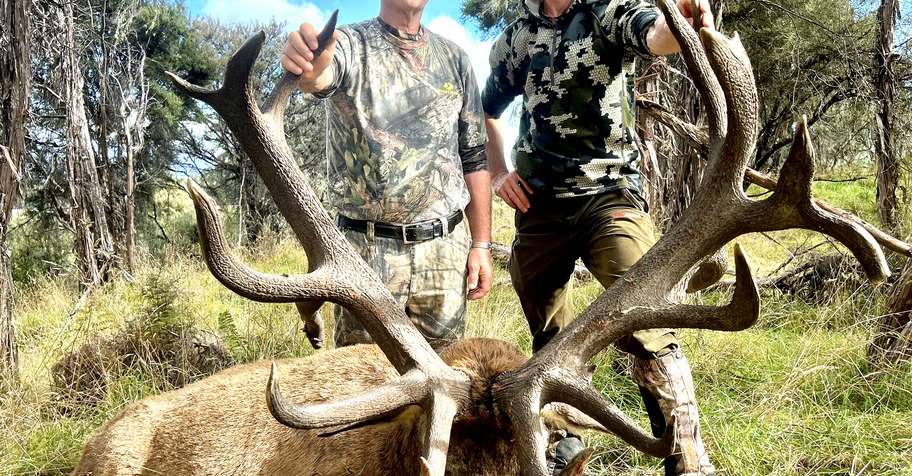
New Zealand Red Stag up to 360 SCI
Otago, Neuseeland
Таhr, Gamswild, Damhirsch, Rothirsch
Büchsenjagd
Season: 28. Feb. 26 - 31. Juli 27
Preis ab
$7,150
$9,800
for 3 days, 1 Jäger
Instant booking
Таhr
Interessiert an diesem Tier?
Newsletter anmelden, um Angebote direkt in Ihren Posteingang zu bekommen
Es könnte Sie auch interessieren
Explore hunting
trips worldwide
trips worldwide
Direct offers from outfitters
with no booking fees
with no booking fees
Verified reviews
from other hunters
from other hunters